

Living well with chronic cough
Impact of chronic cough on quality of life (QoL)
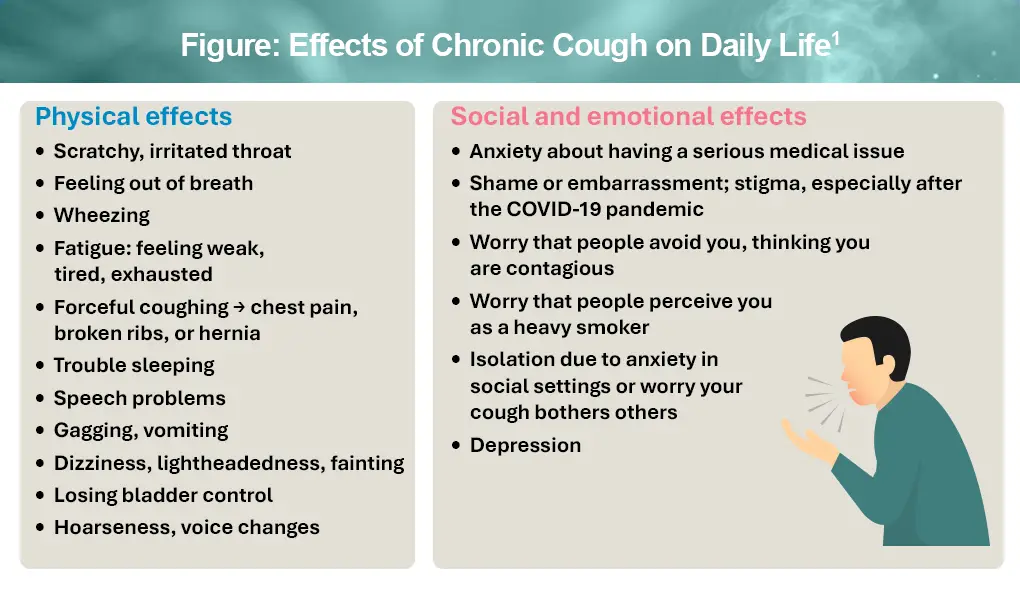
Chronic cough can significantly interfere with daily life. The burden of chronic cough may affect you in many ways—physically, emotionally, and socially, as shown in the Figure.1
What can you do?
Follow directions from your healthcare provider (HCP)
Managing chronic cough often requires a multipronged approach that may include medication prescribed by your healthcare provider (HCP) to treat the underlying cause of your cough and behavioral modification therapy provided by a speech and language therapist.
- Make sure to follow all directions from your HCP for treating your cough
- Discuss any side effects from medication with your HCP
Lifestyle Changes
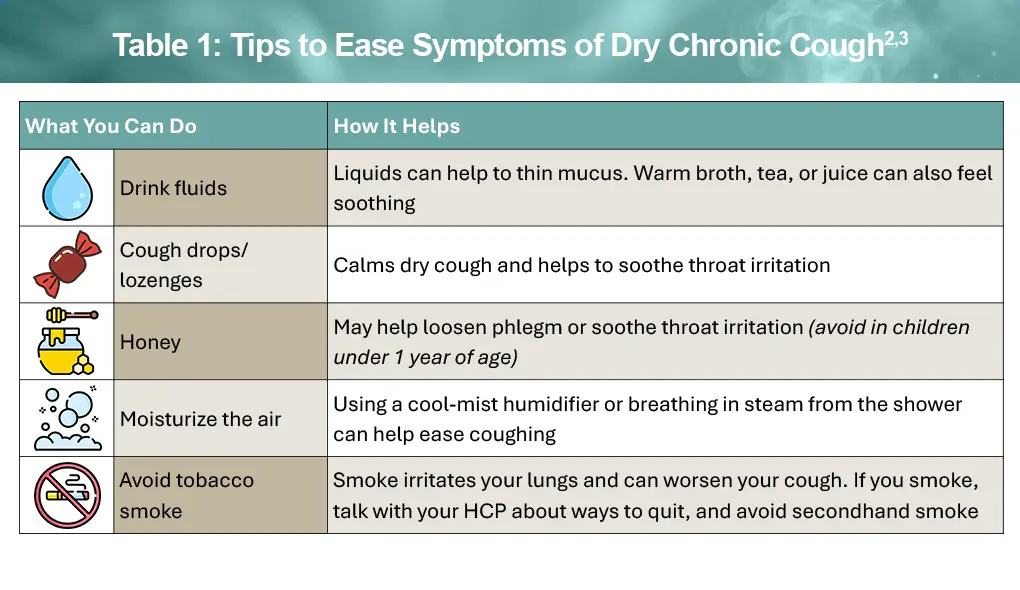
Chronic cough is typically a dry cough, meaning it doesn’t bring up phlegm or mucus. This differs from a productive cough, which is often a sign of pneumonia, bronchitis, or the flu. Making certain lifestyle adjustments can help with management of a persistent chronic cough. Avoiding exposure to irritants, such as cigarette smoke, chemicals, or air pollution can help reduce your coughing episodes. Staying hydrated, practicing good hand hygiene, and avoiding people who are sick can support overall respiratory health and help reduce exposure to germs. Avoid foods that trigger cough related to acid reflux (eg, fatty or spicy foods, coffee, citrus fruits).2,3 Try to participate in some sort of exercise routine, which offers countless physical and emotional benefits. You may also want to try the tips below in Table 1 to ease the symptoms of dry cough.
Emotional health
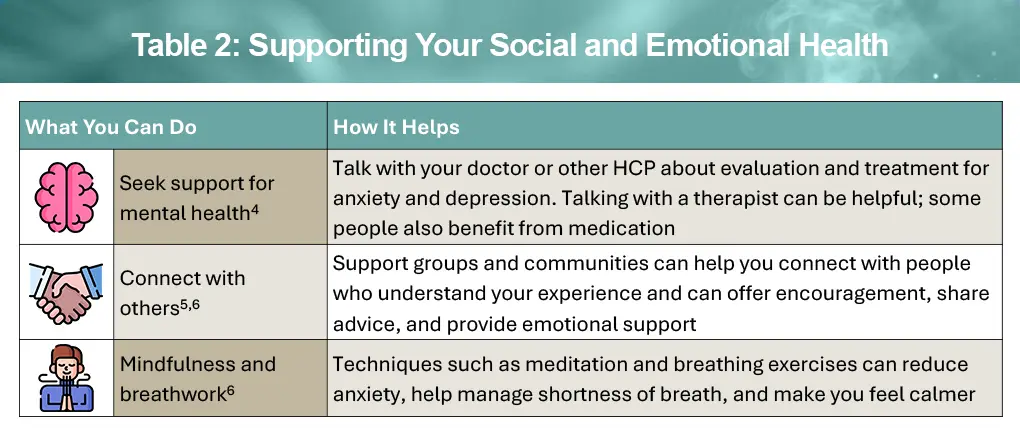
In addition to anxiety and depression caused by living with daily chronic cough, these mental health conditions are also risk factors for developing refractory chronic cough. It’s important to be aware that there are steps you can take to improve the way you feel emotionally, as shown in Table 2.
Remember: You Are Not Alone6
Living with chronic cough can be exhausting, and its effects on daily life are real. The effort required to cope with symptoms and adapt your routines deserves recognition. You do not have to suffer in silence. Finding an HCP who listens, building a support system, and being kind to yourself can help you feel more connected and better equipped to manage what comes next.
Even when chronic cough feels like a constant interruption, continuing to seek answers and move forward reflects resilience.

References
- Canadian Lung Association. Breathe. Chronic cough. https://www.lung.ca/lung-health/lung-diseases/chronic-cough
- Mayo Clinic. Chronic cough—diagnosis & treatment. October 29, 2024. https://www.mayoclinic.org/diseases-conditions/chronic-cough/diagnosis-treatment/drc-20351580
- Everyday Health. Understanding chronic cough. https://www.everydayhealth.com/cough/chronic-cough-what-causes-it-how-to-treat-it/
- Satia I. Management of refractory chronic cough and emerging therapies in 2025. Can Respirol Today. 2025;1:5-11. https://canadianrespirologytoday.com/article/view/1-2-Satia.
- Living with chronic cough. https://www.inspire.com/groups/chronic-cough/.
- Poplar Pulmonary Wellness. Coping with cough: the emotional weight of a constant companion. June 18, 2026. https://www.poplarpulmonary.com/blog/coping-with-cough-the-emotional-weight-of-a-constant-companion
All URLs accessed March 24, 2026