

What Is Refractory Chronic Cough?
What is refractory chronic cough?
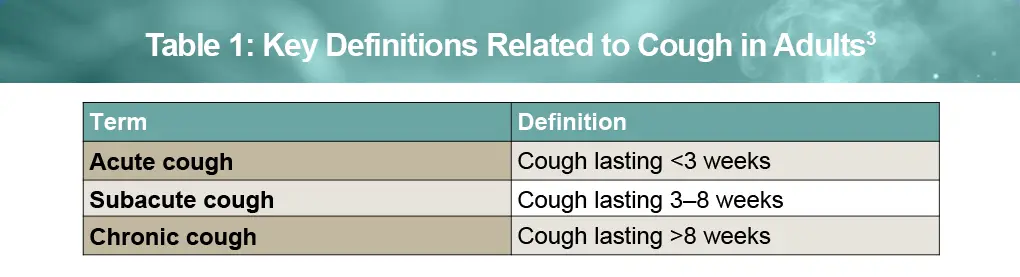
Coughing is a protective reflex that removes harmful foreign irritants from the body. However, when cough is persistent and becomes a longstanding problem, it can negatively impact one’s daily routine and may also be a sign of a more serious illness.1 Chronic cough is defined as one that lasts longer than 8 weeks, whereas acute cough lasts <3 weeks and subacute cough lasts between 3 and 8 weeks, as shown in Table 1.2,3
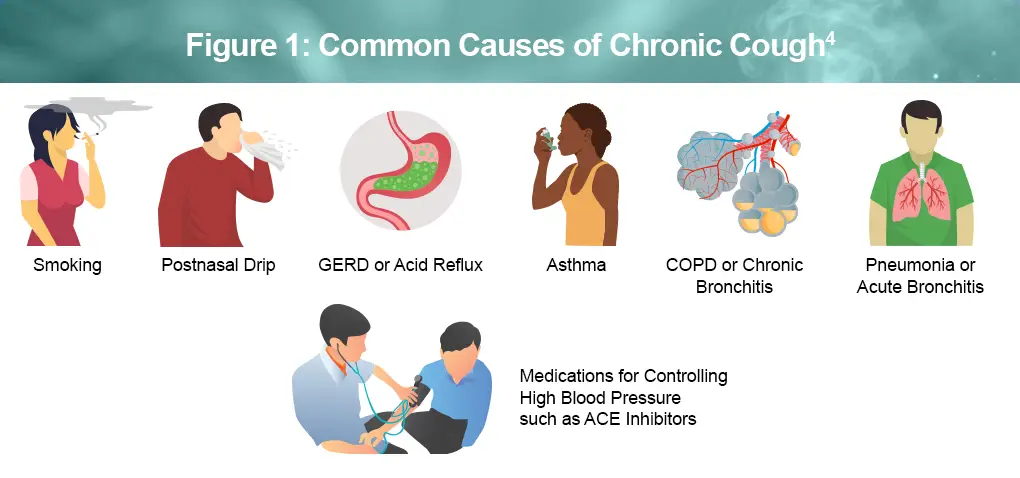
For most patients, the underlying cause of chronic cough can be identified. Chronic cough is very common and may be associated with many underlying health issues. However, identifying the possible cause can be a lengthy process. Although cough is a well-understood symptom of many lung diseases, there are some patients who do not respond to available treatments or for whom no underlying cause can be identified. In these patients, their cough is considered refractory, meaning that despite proper medical evaluation and treatment, their cough still persists. This is referred to as refractory chronic cough (RCC).2,3 Figure 1 shows some of the most common causes of chronic cough seen in adults.
RCC is believed to be a separate condition from other causes of cough, driven by changes in the nervous system that make the cough reflex more sensitive. People with RCC experience a constant sense of the need to cough, often triggered by very minor stimuli.5
How common is RCC?
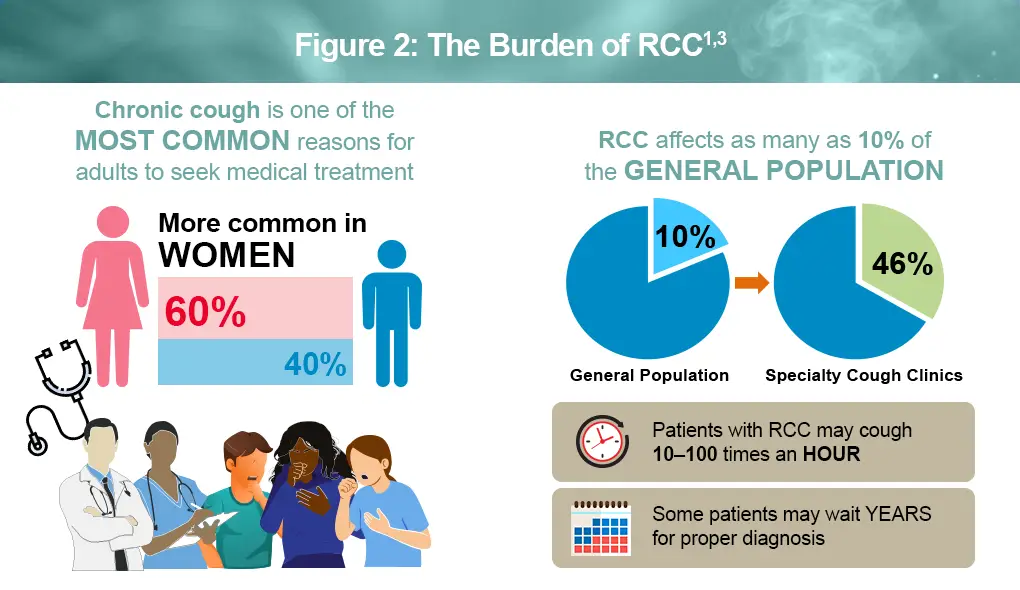
Chronic cough is one of the most common reasons why adults seek medical treatment and is more common in women than men. RCC affects as many as 10% of people in the general population and as many as 46% of patients who are referred to a specialty cough clinic.1-3 Patients with RCC may cough anywhere from 10 times per day to 100 times per hour, and for some patients it can take years before they find a physician who can help them with the diagnosis. Figure 2 highlights the prevalence, frequency, and patient burden associated with RCC.1,3
What are the signs and symptoms of RCC?1,3
People with RCC often have a cough that lasts for many weeks or months and does not improve with usual treatments. Over time, the cough may evolve from a typical cough caused by a cold or another illness. Patients with RCC often feel a lump in the throat and a constant urge to cough.
RCC symptoms include:
- Persistent, dry cough (sometimes with little or no mucus)
- Frequent urge to cough, tickle sensation or irritated throat
- Cough triggered by everyday activities such as talking, laughing, breathing in cold air, strong smells (aerosols, perfume, smoke, cleaning products)
- Cough is out of proportion to underlying condition if one exists
Some people with RCC may also experience:
- Shortness of breath
- Hoarseness, voice changes
- Sore throat, feel something stuck in the throat
- Fatigue, sleeplessness, or effect on daily activities
- Embarrassment, social discomfort due to frequent coughing in public
- Dizziness
- Headaches
- Anxiety, depression
- Loss of bladder control
- Chest discomfort
What to expect with RCC
RCC often significantly disrupts people’s lifestyles, imposing physical, social, and emotional burdens that negatively affect their quality of life.1,3
In addition, living with a chronic cough can negatively affect mental health, causing anxiety, depression, increased stress, and reduced self-confidence. If your cough has lasted for a long time and has not improved, it is important not to ignore it.1 Start with your primary care provider (PCP) to obtain a thorough evaluation to rule out more common causes of chronic cough. If your cough does not improve, ask your PCP for referrals to specialist care (eg, pulmonologists, allergists, speech pathologists, cough clinics) to help you get answers sooner. Growing awareness of RCC, newer approaches to diagnosis, and emerging treatments are helping to change how this condition is recognized and managed, giving patients more reasons for hope than ever before.3
References
- Global Allergy Asthma Patient Platform. Chronic Cough. 2026. https://pauseyourcough.com/en
- Gibson P, Wang G, McGarvey L, et al. Treatment of unexplained chronic cough: CHEST Guideline and Expert Panel Report. CHEST. 2016;149:27-44.
- Dicpinigaitis PV, Altman KW, Ulger Isci I, et al. Interdisciplinary collaboration in the diagnosis and management of chronic cough: the role and importance of primary care providers. Curr Med Res Opin. 2023;39:1375-1381.
- Breath Clinic. Chronic cough. 2026. https://www.breathclinic.in/chronic-cough-doctor-near-me/
- Keller JA, McGovern AE, Mazzone SB, et al. Translating cough mechanisms into better cough suppressants. CHEST. 2017;152:833-841.
All URLs accessed March 19, 2026